
lue flowers hold a special place in the flower world as they’re relatively rare.
Unlike the more common red, pink, and yellow blooms that are easily seen, true blue flowers are quite uncommon, which makes them stand out in bouquets and gardens alike.
What do blue flowers mean?
Across cultures, blue flowers are associated with peace and calm, reflecting the tranquil nature of blue skies and the sea. But in the language of flowers, different shades of blue carry slightly different meanings. Lighter blues often convey innocence and trust, while deeper blues represent wisdom, loyalty, and spirituality.
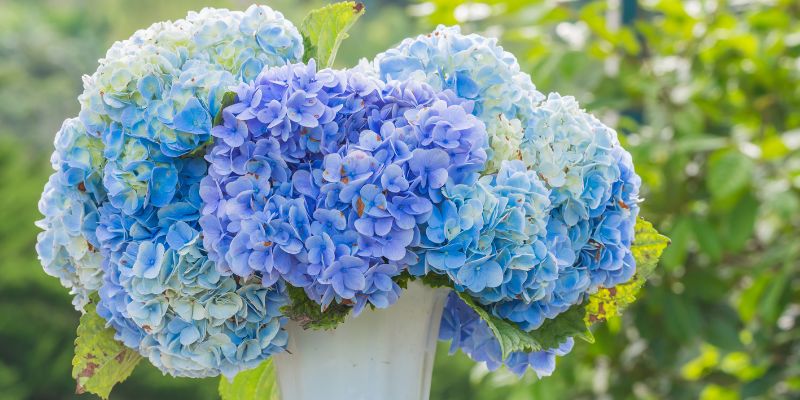
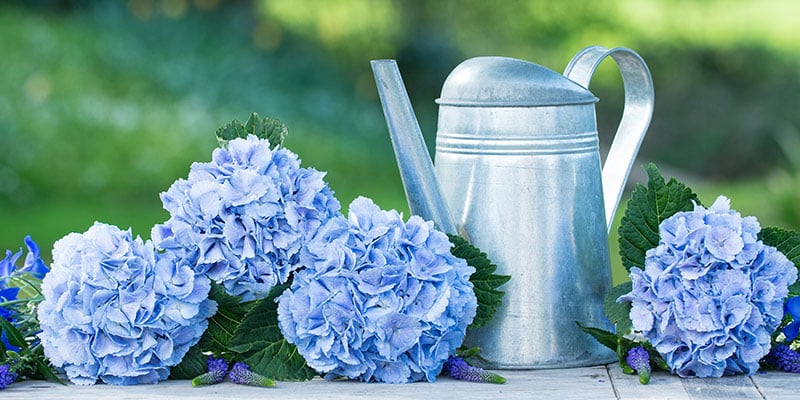
Hydrangeas
One of the most fascinating features of hydrangeas is their ability to change colour depending on the soil pH. In acidic soil (with a pH below 6), the blooms typically turn blue, while alkaline soil (with a pH above 7) produces pink flowers. Blue hydrangeas can represent deep emotions, gratitude and apologies, particularly in Japanese culture. The link to apologies comes from a Japanese legend where an emperor offered blue hydrangeas as an apology. But in other contexts, such as the Victorian era, their meaning was negative, representing rejection or jealousy.
Roses
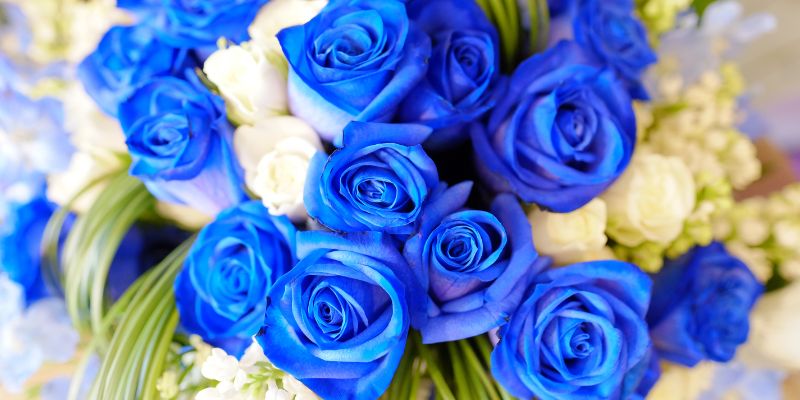
True blue roses don’t exist, as they lack the gene that has the ability to produce a blue colour, but they can be created through genetic modification or by dyeing white flowers blue. The closest natural ‘blue’ rose is the Blue Moon, which is more of a lavender colour.
Unlike traditional red roses that symbolise love and passion, blue roses convey enchantment, secrecy and mystery, and have been seen throughout art and literature. In some cultures there is a saying that the owner of a blue rose will have all their wishes come true.
Agapanthus
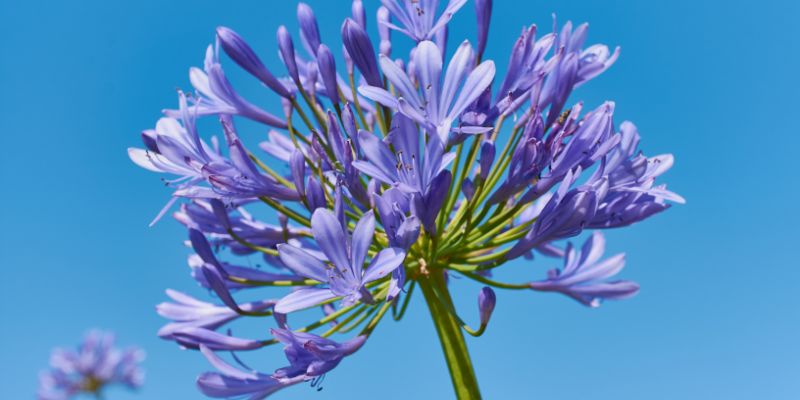
Blue agapanthus, often called the African lily or Lily of the Nile, is a perennial with trumpet shaped flowers that’s native to South Africa. Often linked to love, beauty and purity, its blue blossoms in particular are thought to embody calmness, trust and depth. In some cultures, the agapanthus is seen as a flower of protection and strength, with its long-lasting blooms symbolising resilience and endurance (the Everpanthus species can last for up to 17 weeks).
Hyacinths
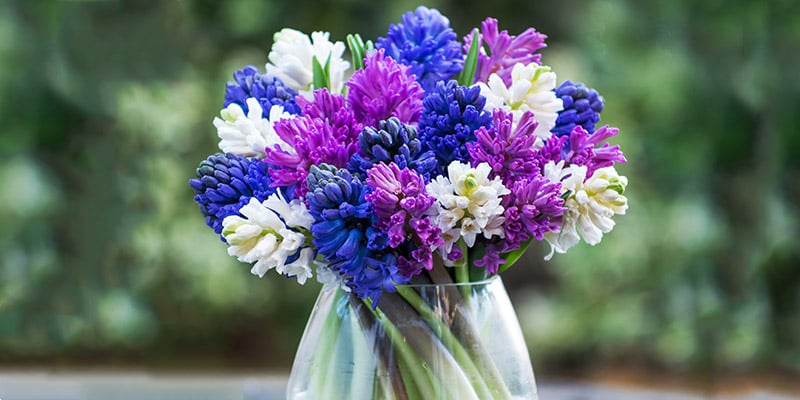
You’ll always recognise hyacinths, with their tightly packed, bell-shaped blossoms. Their flowers are condensed into clusters along a single upright stem, with their colours ranging from soft sky blue to deep indigo. Their fragrance is also one of their defining qualities, with a sweet and slightly spicy scent.
Blue hyacinths in particular are often associated with sincerity and peace, making them a popular choice to add a sense of calm in gardens, as well as bouquets and floral arrangements. They also have a long history in art and culture, and are frequently celebrated as a symbol of rebirth and renewal, especially during spring.
Irises
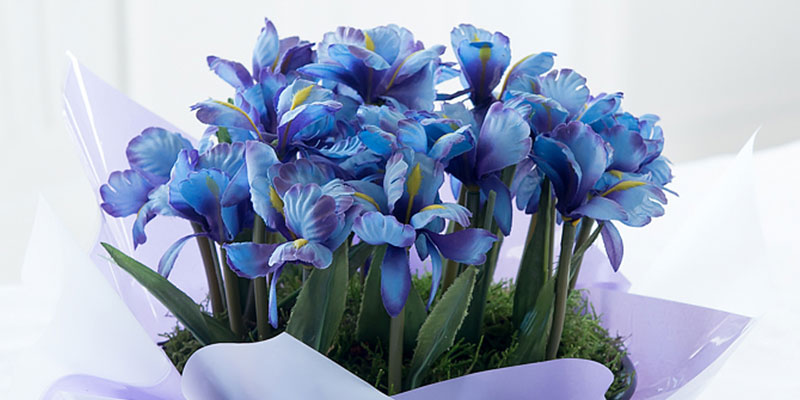
The iris is known for its unique foliage and eye-catching blooms that come in a wide array of colours, including rich blues, purples, yellows, whites, and even bi-coloured varieties. Its name comes from the Greek word for ‘rainbow’ as a nod to its colour diversity. Popular varieties include the bearded iris, Siberian iris and Japanese iris, each preferring slightly different growing conditions. In general though, irises love full sun and well-drained soil, and many types develop strong drought tolerance once they’re fully established.
Blue irises are one of the most popular shades, and represent faith, wisdom, and trust. A springtime staple, we love pairing irises with with sunny yellow daffodils for a vibrant seasonal bouquet.
Alliums
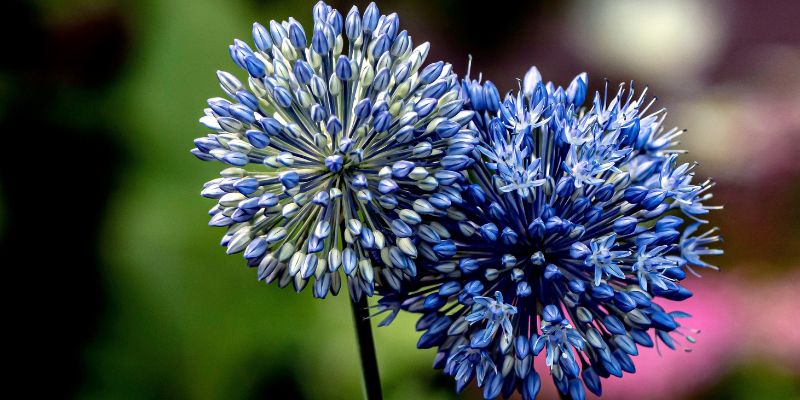
Actually belonging to the onion family, alliums feature spherical clusters of star-like flowers, with delicate slender stems. Flowering from late spring to early summer, they can come in a variety of blues, from soft pale shades to deep midnight hues.
Alliums are generally a sign of good luck and prosperity, and often included in bouquets for those who are facing a new chapter, such as starting a new job or moving house. They’re also associated with patience and perseverance as they are slow to bloom, so they can also be included in bouquets for those who are in a period of change.
Delphiniums
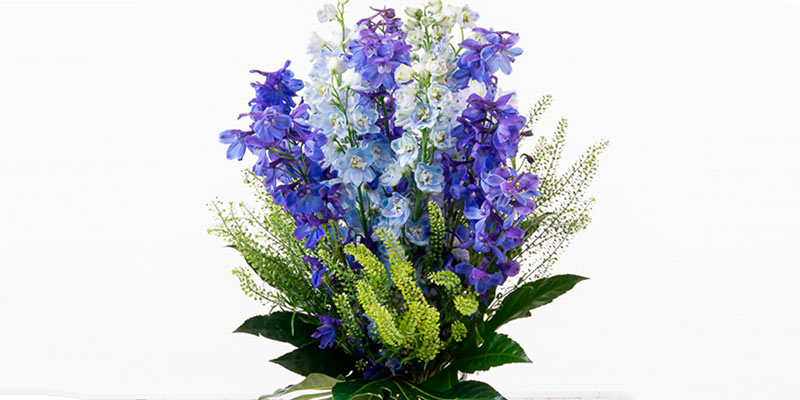
The delphinium is instantly recognisable by its impressive height (it can grow from 2 to 6 feet tall) and its dense blooms in shades of blue, purple, pink, and white. Its name comes from the Greek word delphis, meaning dolphin, which was inspired by the dolphin-like shape of some of its flowers. There are approximately 300 different species, and it’s naturally found growing in the high mountain regions of tropical Africa. Among its many varieties, the most loved is the Delphinium elatum, renowned for its towering flowers and bold colours, especially deep blues and purples.
In the language of flowers, blue delphiniums are said to symbolise dignity and respect. They are also the birth flower of July, making them a fitting addition to summer birthday bouquets.
Thistles
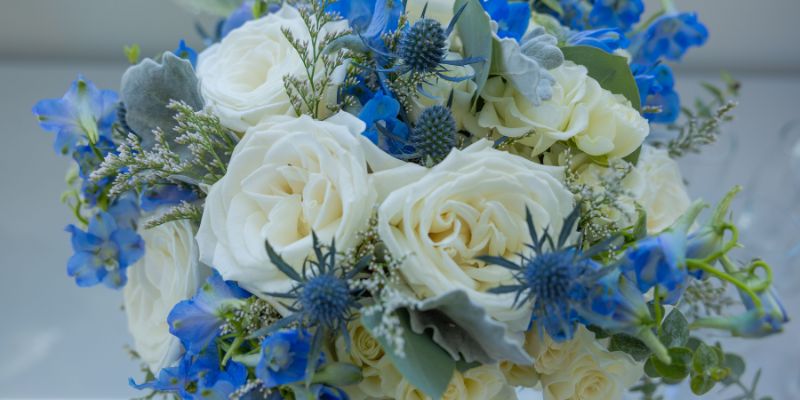
The spiky structure of thistles mean that they are often associated with protection and resilience. In Celtic traditions, the thistle is a sign of bravery and nobility, and its blue varieties add an extra layer of meaning, representing calmness, truth and clarity. Blue thistles are also tied to themes of independence, uniqueness and individuality, as their prickly form makes them stand apart from more conventional blooms.
Veronica
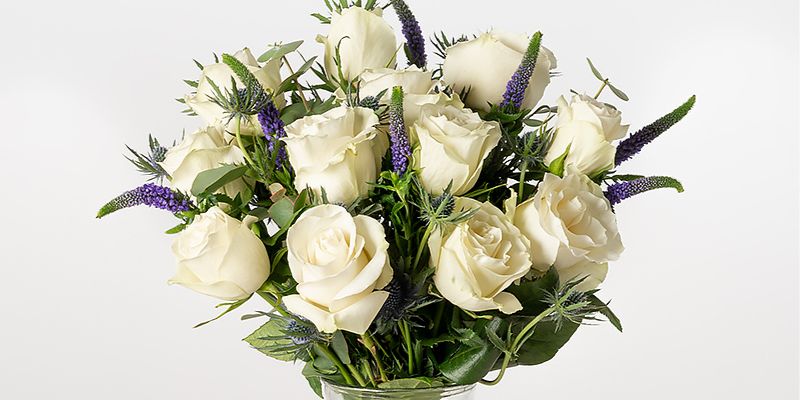
Blue veronica, often called speedwell, features a tall, tapering shape with small blue blossoms. It’s often associated with fidelity and loyalty, with its long-lasting flowers reflecting constancy in love and friendship. In folklore, the flower was linked to protection and healing, and sometimes carried as a charm for good luck or to ward off misfortune.
Forget-me-nots
Belonging to the Myosotis genus, forget-me-nots are loved for their sky-blue colour and delicate, dainty nature. Forget-me-nots represent true love, faithfulness and remembrance, making them popular in romantic literature as well as for remembering those we have loved and lost. Their clear blue hue is associated with loyalty and trust, while their modest size reflects humility and sincerity.







 Loading...