
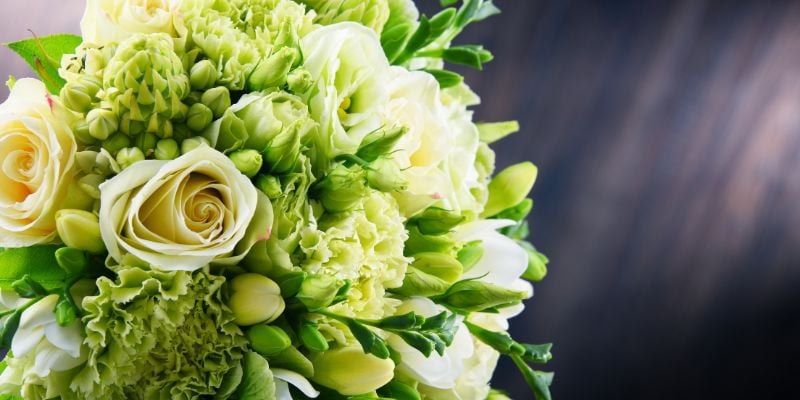
Although often overlooked as a background element, green flowers are a refreshing addition to any bouquet. As a symbol of renewal and growth, hope, and good health, green flowers are the ideal pick for many occasions.
Congratulating someone on a career milestone? Wishing a friend a speedy recovery? Welcoming a new baby, or attending a housewarming gathering? A green bouquet is a perfect way to offer a heartfelt show of support.
Whether mixed among other blooms or taking centre stage as an all-green display, they serve as a thoughtful gesture. Existing in a range of shades, which occurs as a result of chlorophyll presence in the petals, their relative uniqueness bestows a special significance upon green flower bouquets.
Familiarise yourself with these green flower varieties to surround yourself or loved ones with the calming blooms that inspire renewal and hope.
Green Hydrangea
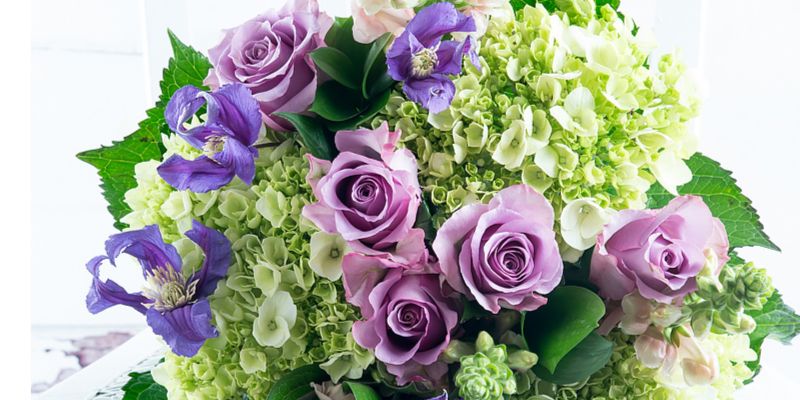
Green hydrangeas, with their sculptural heads of clustered florets, are a statement in any bouquet. The green variety is typically associated with good fortune and prosperity, making them a thoughtful choice for those embarking on a new chapter, whether professional or personal.
The shade may vary from a soft, paler tone, to more vibrant lime greens, depending on two factors:
- Some varieties are green by nature, such as Magical Green Delight, Limelight or Pistachio. Their hue is linked to the soil’s aluminium content. When aluminium levels are low, chlorophyll levels stay high, causing the sepals to remain green.
- Alternatively, it can depend on the plant’s stage of life. Early in their development, before they have transitioned into full blooms, the flowers appear green. Later, as the flower ages, their sepals mature which reverts their colour back to green. This process is especially prominent in warmer climates.
Gladiolus ‘Green Star’
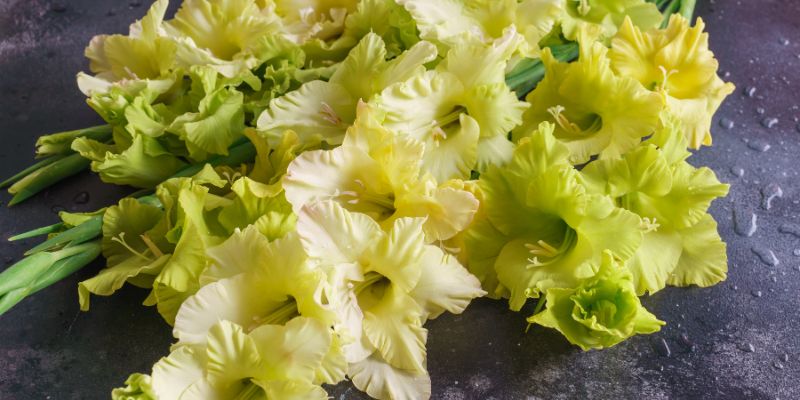
With tall stems consisting of multiple ruffle-petalled florets, these delicate lime green blooms offer a burst of freshness. Whilst the wider species of gladiolus flowers originates in Africa, the ‘Green Star’ variety is a hybrid that was developed in Holland.
Meaning “little sword” in Latin, due to their sword-shaped form, gladioli are known to symbolise strength and success. Combined with the connotations of renewal behind green flowers, this demonstrates their worthiness in situations involving new beginnings. The height and upright shape of the ‘Green Star’ brings a striking dimension to all floral arrangements.
Brassica
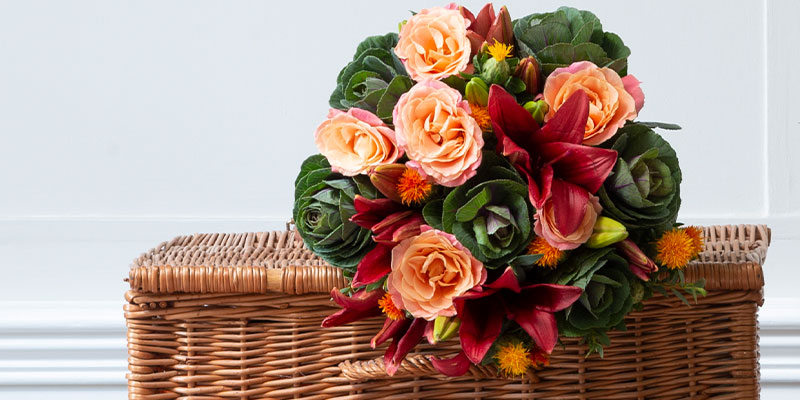
Also known as ornamental cabbage or kale, brassica flowers, with their exquisite and striking form, are a staple for autumnal and winter bouquets. The full headed stems feature layers of crinkled leaves, granting brassica blooms a quality of unique boldness.
A true structural sensation, these flowers are often dual-toned with a purple or white centre, surrounded by earthy green leaves. However, entirely-green variations exist, displaying an intricate gradient of green shades. The flower’s colour is temperature-dependent, with cooler temperatures producing stronger hues, due to lower levels of chlorophyll production.
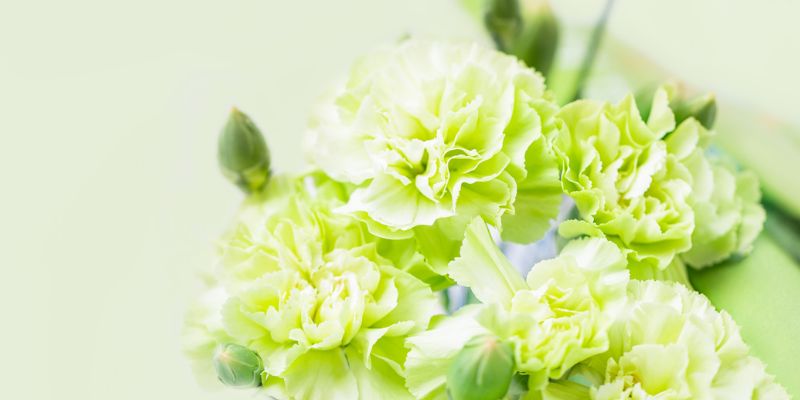
Carnations
These delicate blooms, consisting of silky petals and an appealing fragrance, hold three key meanings:
- Good luck and health, in accordance with the colour green’s association with nature and life.
- Significance to the LGBTQ+ community: Oscar Wilde requested that his friends join him in wearing a green carnation in their lapels in 1892, on the opening night of Lady Windermere’s Fan. This trend became a discreet symbol of homosexuality in a time when it was illegal and has remained an emblem of pride today.
- Often used in St Patrick’s Day decorations due to their green hue and implications of luck, alongside, yet less prominent than, shamrocks.
Carnations are January’s birth flower, placing particular relevance on green varieties as their representation of luck and renewal coincides with renewal at the start of the year.
Chrysanthemums
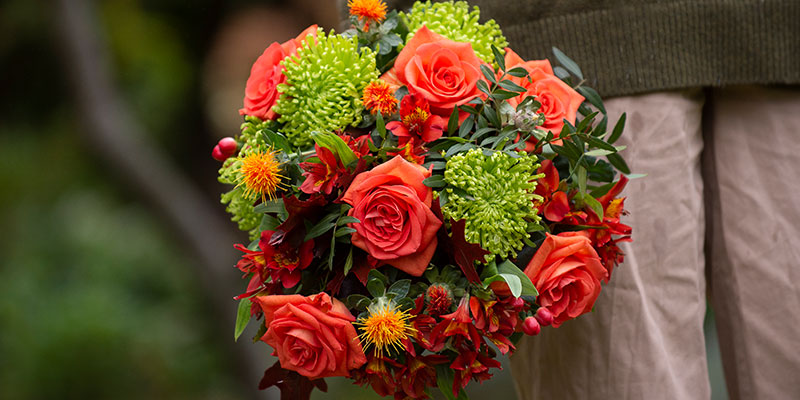
A member of the Asteraceae family, chrysanthemums are an autumn bloom with a full-bodied form and a dense, detailed petal pattern. Native to east Asia and northeastern Europe, they are widely admired for their pom-pom shape.
Green chrysanthemums are emblematic of well-being and are believed to attract positivity and luck. With their prominent spherical heads, a single stem can be a powerful statement in any floral display. Their undertones of well being and optimism grant them to be a meaningful gesture in any situation.
Lady’s Mantle
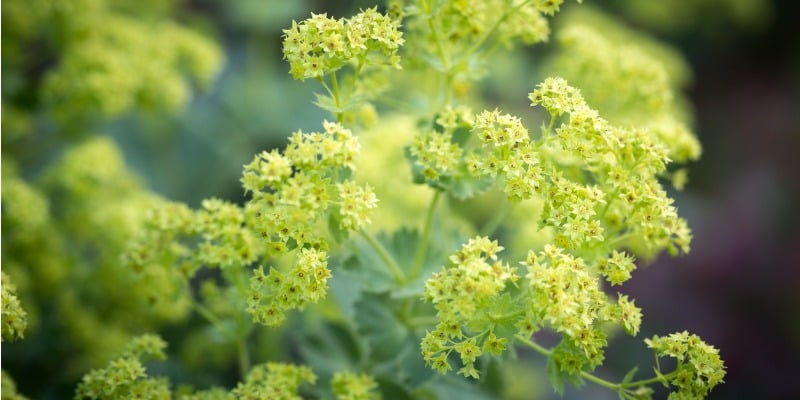
Lady’s mantle, or Alchemilla, is a delicate plant consisting of soft, scalloped leaves and scattered, dainty green flowers. It is a stem which lends an ethereal element to a bouquet, with its small but numerous flowers and wide reaching structure.
Originating from European, North American and Asian mountain areas, this plant holds folkloric significance rooted in protection. It has been thought, historically, to possess medicinal properties, and has traditionally been used to treat digestive issues, heal wounds and provide female health benefits. It is a top contender for a get-well or new-mother gift.
Orchids
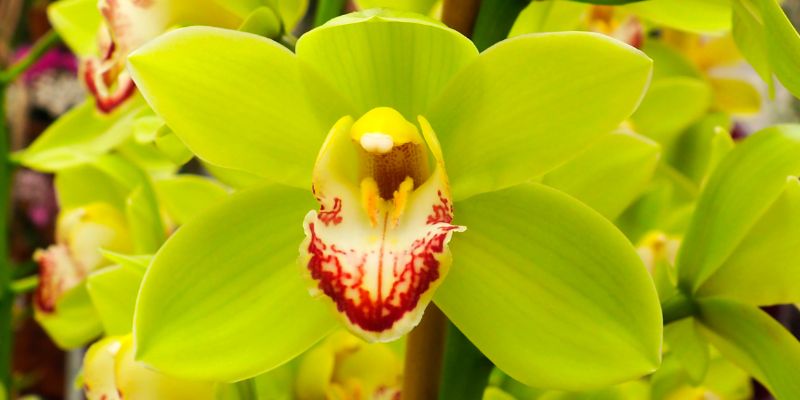
Symmetrical and sculptural, green orchids convey effortless grace with their flowers positioned upon a single, tall stem. They can be found in varying shades and may consist of unique markings, complementing their exotic, elegant forms.
Their longevity reflects the values they represent, of life and balance. In Ancient Greece, these stems were known as a symbol of fertility. This, alongside green flowers’ more general connotations of hope and renewal, deem them a worthy gift for any new mothers or those soon to be.
Lisianthus
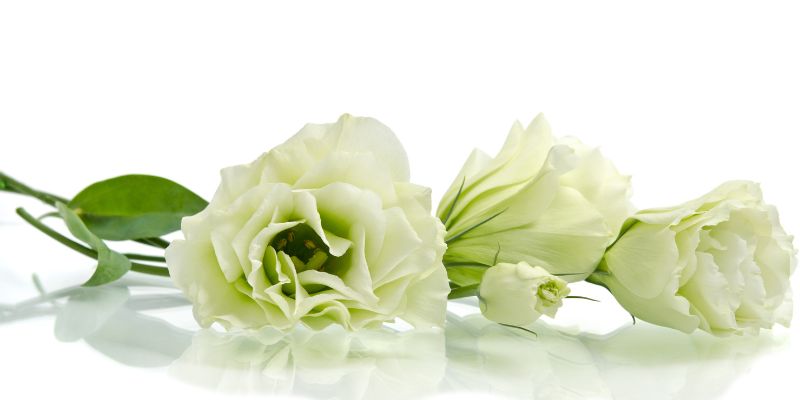
The soft, fragile petals of the lisianthus flower define them as a charming and eye-catching component in any floral creation. Their pale green hue contrasts their dark green stems and leaves, distinguishing themselves against other lisianthus varieties.
A bouquet featuring green lisianthus is a suitable choice for your newly-married or recently promoted friends. Not only do they have a long vase life, but these stems hold connotations of wealth and fertility. Native to America’s grassland areas, they are a captivating, enchanting and beautiful bloom.
Hypericum Berries
Part of the Hypericaceae plant species, hypericum is also known as St John’s Wort and features round, firm and glossy berries. Their aesthetically pleasing structure offers variety which will enhance your flower bouquet.
These plants are native to Europe, North America and central and western Asia and have been used traditionally to treat insomnia and depression. They were previously believed to have protective and healing qualities, historically being used as a defence against witches, magic and evil.
The berries, however, primarily serve as decorative. They appear during the transition between summer and autumn. As a marker of seasonal change, these berries act as a visually appealing asset amongst flowers and other decorative stems.







 Loading...