
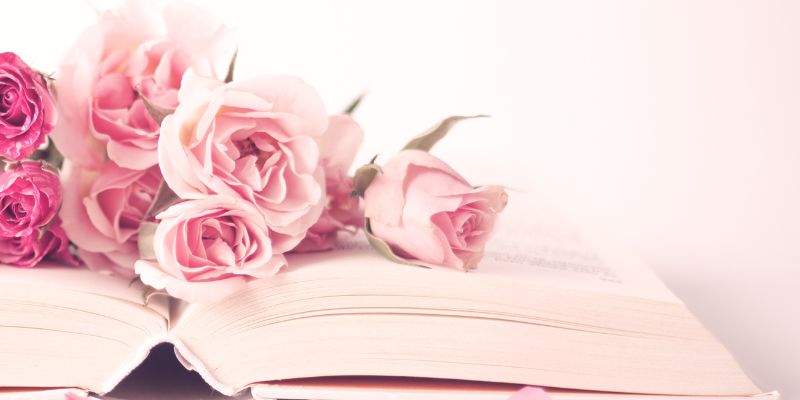
If you consider yourself a bookworm, you’ll know that World Book Day is fast approaching on 5th March.
This fun-filled charity event sees children up and down the country go to school dressed as their favourite book characters and take part in community events. Yes, the costume planning may cause frazzled parents some grief, but the joy of reading is certainly worth celebrating, no matter your age. The best books offer escapes into other worlds, where we can leave our day-to-day stresses behind and let our imaginations run wild – it’s no wonder that so many of us will talk passionately about the books we loved in childhood and still return to as adults.
Flowers are also heavily linked to storytelling (they have their own language, after all), and, as such, they have always played a starring role in literature. So, to combine our two great loves, here’s our pick of bookish blooms that are sure to inspire and delight any bibliophiles in your life.
Roses
The queen of flowers has long been used by authors as a symbol of romance, but perhaps most famously by William Shakespeare. The bard loved this quintessentially English bloom, so much that the word ‘rose’ appears more than 70 times in his 16th-century plays and sonnets – you’ll no doubt already be familiar with the line, “What’s in a name? That which we call a rose, by any other name would smell as sweet”, from Romeo and Juliet, his tragic tale of star-crossed lovers.
You may also think of the rare rose, from the original French fairytale of Beauty and the Beast, which Belle’s devoted father steals for her from the Beast’s castle garden, triggering his rage. In the Disney movie, the rose is magic – the prince, who was turned into a beast by a witch as punishment for his entitled behaviour, must find true love before its final petal falls, else he will remain a monster forever.
Then there’s the personified rose in Antoine de Saint-Exupéry’s The Little Prince – a main character in its own right. In this charming story, a young prince falls in love with a rose, which symbolises the author’s own wife. Though flawed in many ways, he comes to realise that although she is by no means the only rose, she is the most special to him because he has grown and nurtured her. The prince learns that “what is essential is invisible to the eye”, and that it is the time invested in our relationships that give them meaning and make them precious.
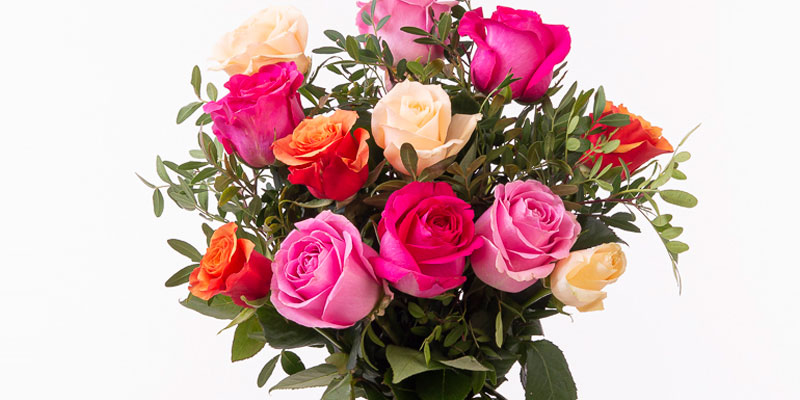
Orchids
No flower represents wealth and refinement quite like the orchid, thanks to its reputation as a status symbol, which began in the Victorian era when this exotic, sculptural bloom first arrived in Europe from the tropics. Given how tricky orchids were to transport and cultivate – growing them required expensive heated glasshouses and specialist gardeners – they were luxuries afforded only by the upper classes. ‘Orchidmania’ peaked in the late 19th century, with collectors paying the equivalent of thousands of pounds for the most prized specimens, and persisted into the early 20th century.
Set in the Jazz Age of the 1920s, F. Scott Fitzgerald’s The Great Gatsby sees orchids appear as recurring emblems of excess, illusion and fragile beauty. They are primarily associated with Daisy Buchanan and her glittering “artificial world”, which is described as being “redolent of orchids and pleasant, cheerful snobbery”. In Baz Luhrmann’s 2013 film adaptation, Leonardo DiCaprio’s Gatsby and Carey Mulligan’s Daisy are seen reuniting in a room filled with cream, blush and soft green orchids – and it’s quite a sight to behold! So, if you know a bookworm with sophisticated taste, you know what to do…
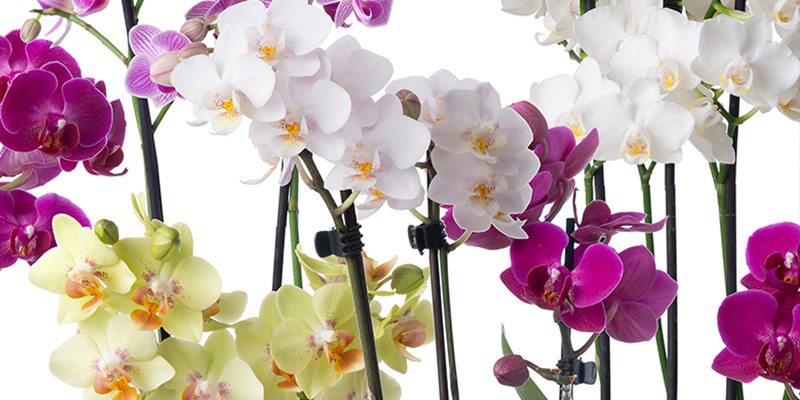
Daffodils
Poetry lovers will no doubt know that William Wordsworth’s masterpiece, “I Wandered Lonely as a Cloud”, was inspired by a spring stroll he took in the Lake District with his younger sister, Dorothy, during which the pair stumbled upon “a host of golden daffodils”. This majestic sight brings the poet great joy and leaves a lasting impression upon him, reflecting the power of nature to restore and replenish us. Sending a bunch of daffodils, therefore, invites the recipient to enjoy life’s simple pleasures and reminds them that warmer, brighter days are coming.
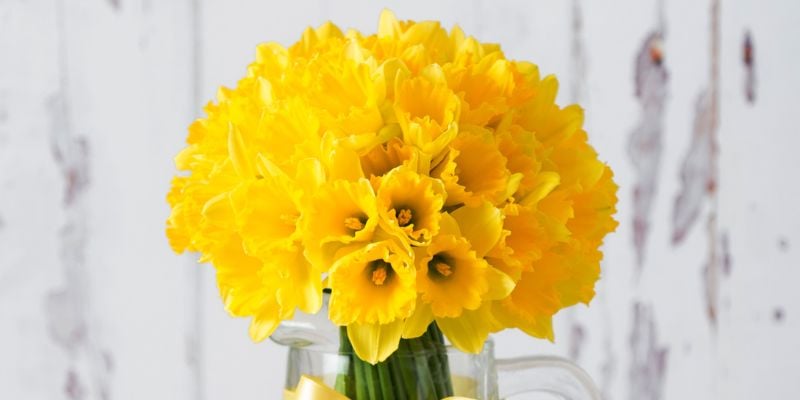
Lilies
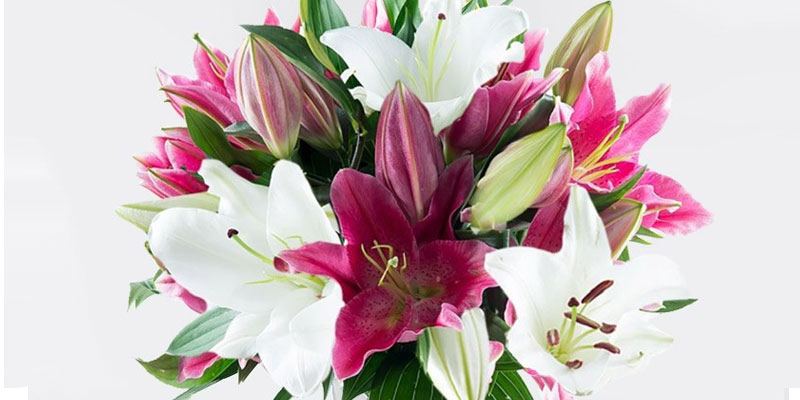
Lilies often appear in novels to reflect purity and timeless elegance, especially when white. In Charlotte Brontë’s gothic classic, Jane Eyre, this ethereal flower reflects the heroine’s moral clarity and restraint amid her darker, more turbulent surroundings. Familiar with the phrase ‘to paint the lily’? It comes from Shakespeare’s King John, where it is used as a metaphor for wasteful, unnecessary decoration of something that is already perfect. Harry Potter fans, meanwhile, will think of Harry’s mother, Lily, and her loving, protective and sacrificial qualities – a powerful contrast to other florally-named characters with negative traits, such as Petunia Dursley and Narcissa Malfoy. If a book lover in your life deserves a ‘thank you’ for everything they do for you, send them lilies.
Carnations
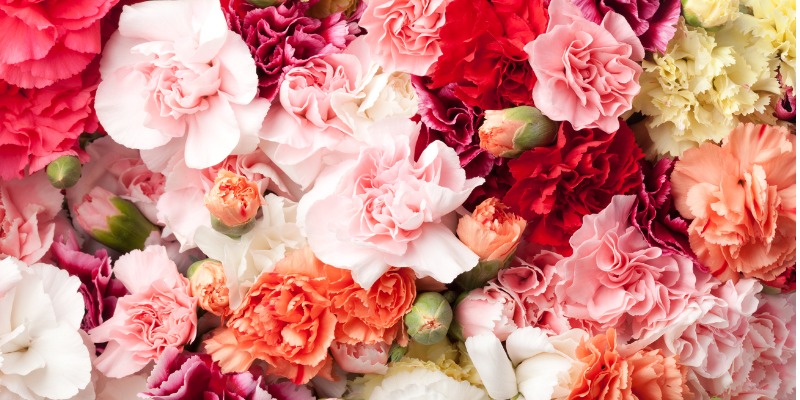
You’ll find pretty carnations cropping up in many famous literary works to convey a variety of meanings. Shakespeare invokes them in The Winter’s Tale during Perdita and Polixenes’ debate on nature and falsity, praising carnations as “the fairest flowers o’th’ season” despite being cultivated, while in Oscar Wilde’s The Picture of Dorian Gray, they echo the novel’s fascination with surface-level aesthetics, sensual pleasure and impermanence. The great Victorian playwright also turned the flower into a modern cultural code by encouraging actors and audiences to wear green carnations at the 1892 premiere of Lady Windermere’s Fan – when worn on the left lapel, they became a discreet marker of gay identity. Carnations are also prolific in Virginia Woolf’s work, appearing 67 times across her fiction, essays and life writing. Often worn as boutonnieres by elderly, wealthy or powerful characters, she uses them to signal class, age, authority, and sometimes, emotional distance, from Queen Alexandra’s ever-present pink carnation in The Years to the yellow carnation of disdain in Lappin and Lapinova.
Wildflowers
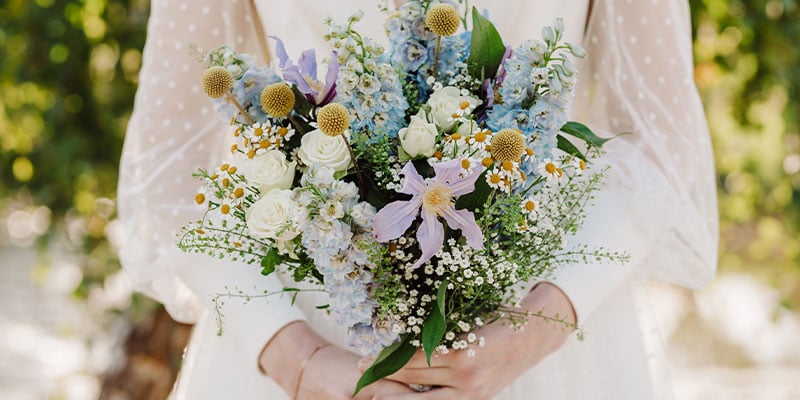
Whimsical wildflowers are mainstays in novels where nature, freedom, authenticity or emotional transformation are key themes. In Frances Hodgson Burnett’s The Secret Garden, they help the troubled characters heal, while in Lucy Maud Montgomery’s Anne of Green Gables, they reflect the young protagonist’s childlike imagination and ability to find beauty in the everyday. Then, in Emily Brontë’s Wuthering Heights and Jane Austen’s Pride and Prejudice, the rugged moorland reflects the passionate, untamed nature of the characters who roam it. Independent, spontaneous souls will always appreciate a bunch of blooms with that ‘just plucked from a meadow’ vibe.
Tulips
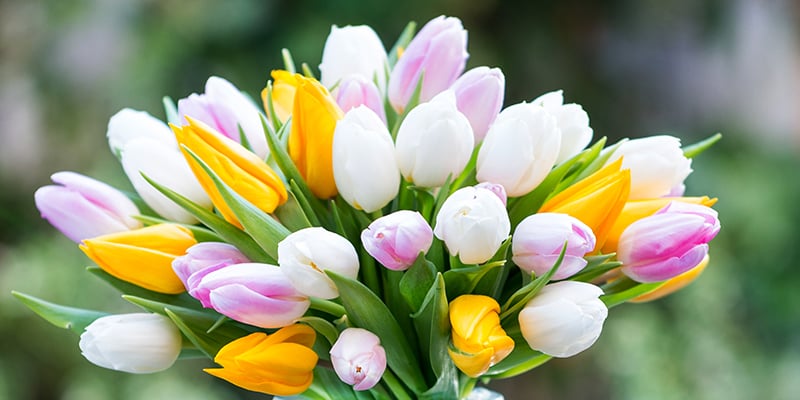
Ah, the tulip, so serene with its simple, cup-shaped petals. We can easily understand why, in both Alexandre Dumas’s The Black Tulip and Deborah Moggach’s Tulip Fever, this colourful bloom becomes an object of desire, splendour and obsession, which symbolises the human drive to capture perfection at any cost. This association is further echoed in Sylvia Plath’s poem “Tulips”, where the flower’s vibrant presence is both life-affirming and an unsettling reminder of a feeling that cannot be ignored. To give tulips is to acknowledge the transience of beauty and encourage it to be treasured in the moment.
Trailing plants
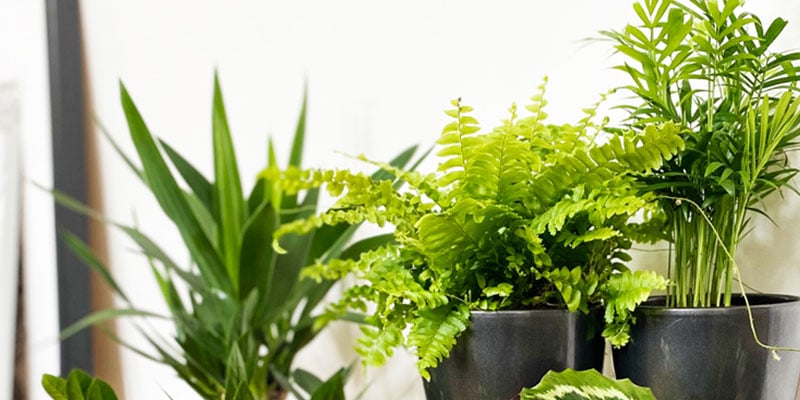
For readers who take as much price in their bookshelves as they do their book collection, consider sending them a trailing plant to liven up their library. Hardy, heart-shaped pothos, also known as devil’s ivy, is a smart choice for beginners – it thrives in bright, indirect light but will also tolerate darker spots without much watering. English ivy and string of hearts are our other top picks for bringing the outdoors in and helping a reading nook feel calmer and more inviting. With the right care – and these are all low-maintenance options – a plant will last longer than cut flowers, giving your gift extra mileage.
Paper roses
If you have some crafty skills up your sleeves, why not consider a DIY bouquet for extra effort points? The way to any bookworm’s heart is surely through paper flowers, lovingly handmade from the pages of their favourite novel. Roses can look particularly effective. Just make sure you don’t use their own cherished copy for your artistic endeavours, or your thoughtful gift might spectacularly backfire. Instead, look in charity shops or on preloved apps – bonus points if you can find a well-thumbed vintage version to turn into a unique keepsake they’ll treasure forever.
You’ll find many of these nostalgic flowers in our stunning range of bouquets. Order now to make your favourite bookworm’s day, with next-day delivery available, and don’t miss our tempting special offers.







 Loading...