
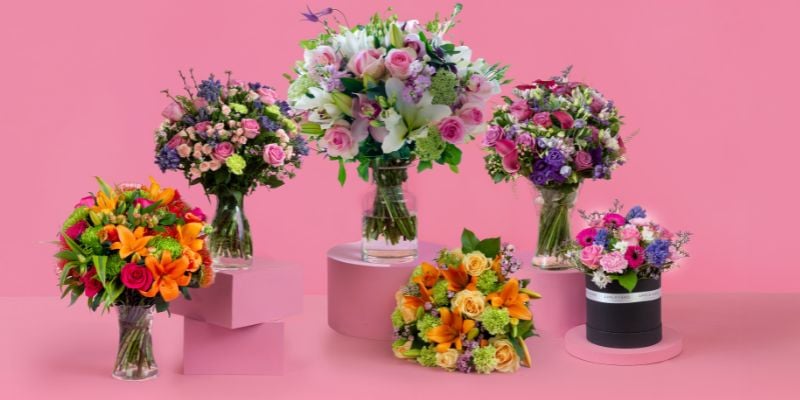
Your first port of call for Mother’s Day is to gift her a beautiful bouquet of blooms, right? But if you’re wondering where to start, we’re here to help.
Flowers have deep meanings that go beyond words, with some symbolisms lasting for centuries. Plus, it’s not only the type of flower that carries different meanings, but also their different colours. But not to worry - you can’t go far wrong with these popular Mother’s Day flowers. Keep scrolling to get to the root of the matter…
Tulips
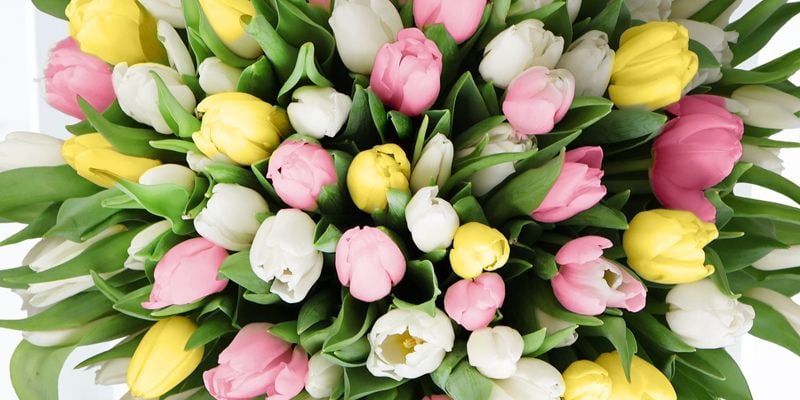
Who doesn’t love tulips? Bringing a pop of colour and a sense of joy, a vase of bright tulips is an easy yet effective way to brighten any room. And different colours mean different things, with white tulips signifying innocence and forgiveness, pink tulips symbolising care and affection, and orange tulips representing energy and enthusiasm. You can also get purple tulips, which are symbols of admiration and respect, and red tulips, which are a symbol of love.
As for their general meaning? In Victorian times tulips were a symbol of charity, but today they act as a reminder to live in the moment and appreciate beauty in the here and now, as they don’t last for long (blooming for 1-3 weeks, and with a vase life of 5 to 7 days).
Roses
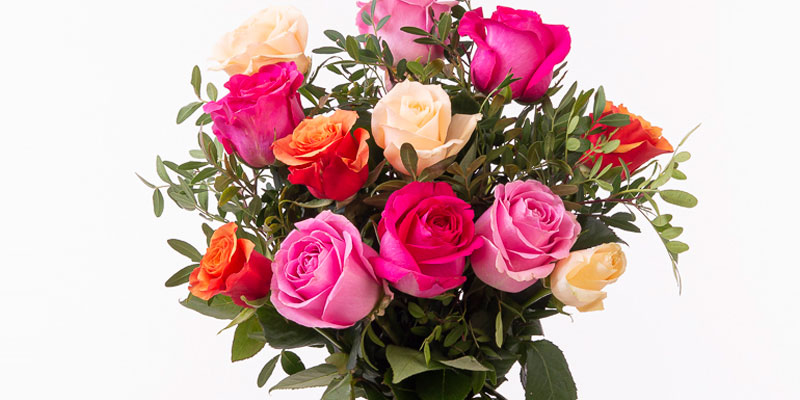
Roses commonly symbolise love and beauty, but as with most blooms, their different colours have a wide range of meanings. Red roses are widely known to represent love and romance, while white roses stand for grace and purity. You’ll often see white roses at weddings, but also at funerals to communicate feelings of respect and remembrance. Yellow roses signify joy, positivity and friendship - perfect for a mum who's also your best friend.
The fan-favourite for Mother's Day is definitely pink roses though, which convey tenderness and appreciation. (In ancient Greece, pink roses also represented Aphrodite, the goddess of love). But of course, there’s many shades of pink roses, with lighter pink colours denoting gentleness and sweetness, and deeper pinks denoting gratitude and admiration. You can also get hot pink roses, which are all about passion and flirtation.
The number of stems also carries different meanings, with 6 roses symbolising love, 7 roses symbolising infatuation, and 8 roses symbolising support.
Daffodils
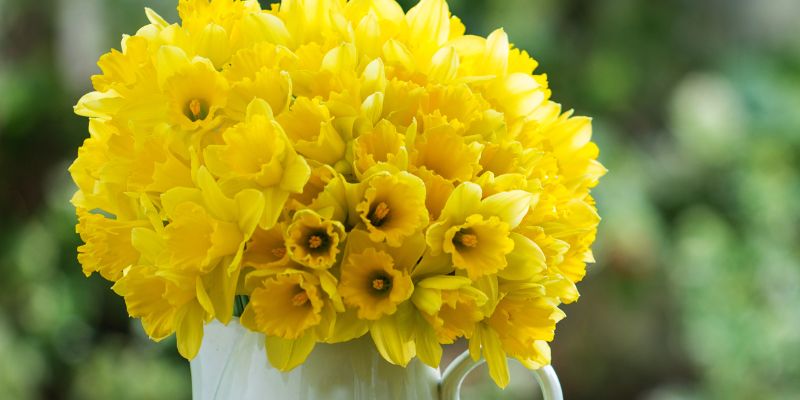
As one of the first flowers to bloom after the winter and signify the start of spring, daffodils are commonly associated with rebirth and new beginnings, with its name being derived from the Old English word ‘affodyle’, which means ‘that comes early’. These meanings make them a fitting choice for Mother's Day bouquets.
Daffodils don’t have different meanings based on their different colours (they can be in shades of yellow, white, cream, peach, orange, and pink), but they are all a symbol of joy and happiness. The meaning varies by country though, with the flower signifying hope in France, good fortune in China, and vitality in Japan.
Carnations
Social activist Anna Jarvis, who founded Mother’s Day in the US in 1908, said that white carnations should represent Mother’s Day, because they allude to the endurance of a mother’s love. Pink carnations are also frequently found at Mother’s Day events, as they embody devotion and gratitude. You could also choose red carnations, as they signify admiration, respect and affection, or yellow carnations, which signify joy and friendship (after all, mothers and daughters are often best friends).
Carnations are also known as ‘the flower of the gods’ due to their scientific name, 'dianthus'. This breaks down to 'dios' which means Zeus, and 'anthos', which means flower.
Freesias
Freesias have a strong symbolism of friendship, as botanist Christian P. Ecklon discovered the flower, but decided to name it after his friend, Dr. Freese.
Around Mother’s Day you’ll often see yellow freesias, which signify happiness and optimism, with the sunny yellow colour also being the perfect shade for spring. But there’s also white freesias, which represent innocence, and pink freesias, which represent love and femininity (pink freesias are also said to smell the best). And if you want to gift something that symbolises royalty and beauty, choose purple freesias.
Freesias also represent the start of spring in Japan, where 350,000 freesias bloom on the Hachijo-Fuji mountain.
Lilies
Immediately recognisable for their unique trumpet shape, lilies instantly add interest to any bouquet. They are a symbol of innocence, purity, and rebirth, and are often found at christenings, funerals and weddings.
Choose pink lilies for a symbol of love and femininity, red lilies for passion and romance, and white lilies for rebirth (white lilies are often found at Easter events to symbolise resurrection). With their vibrant colour, orange lilies symbolise positivity and celebration, making them a great option for Mother’s Day, but also for those starting a new job, have recently graduated, or are a new homeowner, while yellow lilies symbolise happiness and optimism. You can even get black lilies (although they are more of a deep red or purple shade), which give an air of power and mystery.
Lilies are also commonly gifted in China as a symbol of healing to those suffering with a loss or heartache.
We have no doubt that your mum or mother figure will be delighted with whichever flower you choose to gift her, so shop our Mother’s Day bouquets now and make her see how special she is!







 Loading...